 ultimate-guide
What to Do After a Car Accident in Massachusetts
Table of Contents
- What to Do Immediately After a Car Accident in Massachusetts
- Massachusetts Car Accident Reporting Requirements
- Documents Needed for a Massachusetts Car Accident Claim
- How Massachusetts No-Fault and PIP Coverage Handle Your Medical Bills
- What to Say and What Not to Say to Insurance Companies
- What to Do After a Hit-Run Accident
- When to Hire a Massachusetts Car Accident Attorney
- Frequently Asked Questions
Last Updated: October 6, 2026
What to Do Immediately After a Car Accident in Massachusetts
What you do after a car accident Massachusetts drivers face shapes whether your medical bills get paid and whether the insurer takes your claim seriously.
Massachusetts is a no-fault state, which changes almost everything about how a claim proceeds. Your own Personal Injury Protection coverage pays the first layer of medical bills and lost wages regardless of who caused the crash, as the Massachusetts Division of Insurance consumer guide to auto coverage explains.
First Minutes: Safety, Police, and the Accident Scene
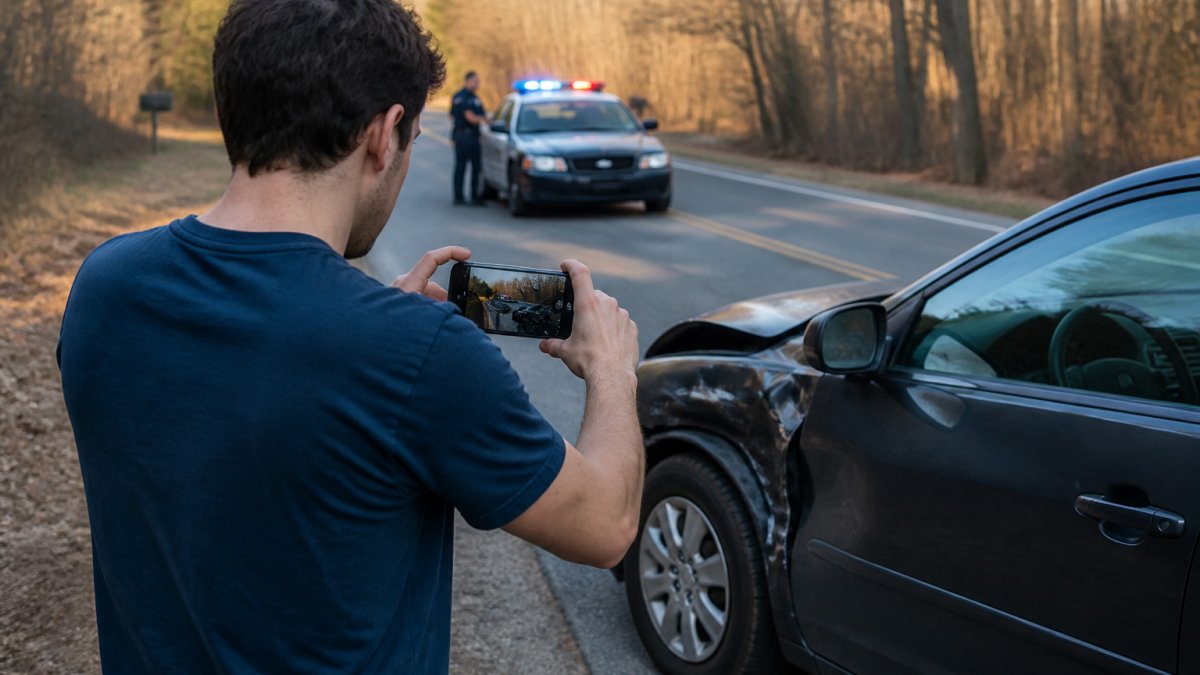
Safety comes first, then the 911 call. Move to a shoulder or sidewalk if the vehicles can be driven, and call police if anyone is hurt or the crash blocks traffic.
At the scene, do these in order:
- Check yourself and passengers for pain before moving anyone
- Call 911 and request police and, if needed, an ambulance
- Turn on hazard lights and set flares or triangles if you have them
- Do not discuss fault with the other driver
- Ask the responding officer for the crash report number before leaving
First 24 Hours: Medical Care and Documentation
See a doctor the same day, even if you feel fine. Whiplash, concussion, and internal bleeding often produce no symptoms for hours or days, and a same-day exam creates the medical record your claim depends on. Waiting to see whether the pain "gets worse" lets the insurer argue the injury came from something else. Tell the doctor exactly what happened, describe every symptom, follow the treatment plan, and keep every discharge paper, imaging result, and prescription receipt.
Massachusetts Car Accident Reporting Requirements
Massachusetts runs two separate reporting tracks after a crash, and they do not replace each other. One is the police crash report prepared by the responding officer; the other is the Driver's Accident Report you file yourself with the Registry of Motor Vehicles. Missing the second can suspend your license and registration, even when police investigated.
The Driver's Accident Report and the RMV Five-Day Deadline
You must file a Driver's Accident Report with the RMV within five days of a crash causing injury, death, or property damage above the state's reporting threshold. The clock starts on the crash date, not the date you feel pain or open a claim.
Key mechanics most drivers get wrong:
- The report goes to the Registry of Motor Vehicles, not to your insurance company and not to the police department.
- Filing it is your obligation as a driver, even if the other driver was clearly at fault.
- If police investigated, the officer files a separate crash report, but that does not automatically satisfy your five-day duty.
Because the state periodically updates forms, the reporting threshold, and the online filing portal, confirm the current requirements on the Massachusetts Registry of Motor Vehicles crash report page before you file.
What Happens If You Miss the Deadline
A late or missing Driver's Accident Report is not a minor paperwork problem. The RMV can suspend your driving privileges and vehicle registration until the report is filed, and reinstating them usually means paying fees and submitting the form anyway. An insurer can also cite the missed filing as evidence you were not treating the crash seriously. If you missed the five-day window, file as soon as possible, late filing beats no filing, and the RMV handles the suspension separately from any insurance dispute.
No-Injury and Minor-Damage Crashes
A fender-bender with no visible injuries still requires an information exchange and, in many cases, a report. Even when nobody appears hurt:
- Exchange names, phone numbers, addresses, insurance carriers, and policy numbers
- Photograph both vehicles, the road, and any visible damage
- Note the location, time, weather, and traffic conditions
Pain can appear the next morning, and the evidence you gathered at the scene is what supports a later claim. If the other driver leaves before you exchange information, treat it as a hit-and-run and call police from the scene.
Filing When You Are Out of State or the Other Driver Is
The five-day RMV deadline still applies if you live in another state and the crash happened here. File the Driver's Accident Report by mail or through the RMV's online portal and keep a copy. If the other driver is from out of state, their insurer may apply different rules, but your reporting duty to the RMV is unchanged, do not assume their carrier will file anything for you.
Documents Needed for a Massachusetts Car Accident Claim
A car accident Massachusetts claim file needs four categories of documents: identity and insurance information, the official crash report, medical records, and proof of lost income. Build it from day one, because insurers request these items in a specific order and delays invite disputes.
Document | Where It Comes From | Why It Matters |
|---|---|---|
Driver's Accident Report | RMV filing | Proves you met the state deadline |
Police crash report | Responding department | Independent account of fault |
Medical records and bills | Treating providers | Links injuries to the crash |
Wage verification | Employer | Supports lost wages |
Photographs and witness details | Accident scene | Rebuts fault disputes |
Evidence to Collect at the Scene
Photographs and witness information decide close cases. Take wide shots of vehicle positions and lane markings, close shots of damage and skid marks, and a picture of the other driver's plate and insurance card. Collect witnesses' full names, phone numbers, and email addresses, and ask each what they saw in their own words.
How Massachusetts No-Fault and PIP Coverage Handle Your Medical Bills
PIP pays first, and it pays regardless of fault. Personal Injury Protection covers medical expenses and a portion of lost wages after a crash, up to the limits in your policy, and it applies whether or not you caused the collision.
This is where most people misread their own coverage. The Massachusetts Division of Insurance publishes the current minimum coverage requirements and PIP limits, which are set by state law and change from time to time.
Health insurance also matters. If your health plan pays a bill that PIP should have covered, the two carriers sort out reimbursement between themselves. Do not let either one tell you that you have no claim because PIP exists.
What to Say and What Not to Say to Insurance Companies
Report the crash to your own insurer, give the facts, and stop there. Your policy requires prompt notice to your carrier, but you are not required to give a recorded statement to the other driver's insurer, and doing so rarely helps. Confusing the two carriers' roles is where most claims go sideways.
Your Carrier vs. the Other Driver's Carrier
Your own insurer handles the PIP side of the claim; the at-fault driver's insurer handles the bodily injury side. Your first call is to your own carrier to open a PIP claim, not the other driver's adjuster. The other driver's insurer will eventually contact you about the bodily injury portion, that is the call where recorded statements, fault arguments, and settlement offers happen, and where you have the most to lose by speaking freely.
What to Say
- Your name, contact information, and policy number
- The date, time, and location of the crash
- That police responded and a report was filed
What Not to Say
- "It was my fault" or any apology, even as politeness
- "I'm fine" or "it wasn't that bad"
- A guess about speed, distance, or how the crash happened
How Recorded Statements Actually Get Used
A recorded statement is not a neutral fact-gathering call. The adjuster is building a file, and the questions are designed to lock you into a version of events before you have medical records, know the full extent of your injuries, or have spoken with counsel. A common pattern is to ask about speed, distance, and how you felt at the scene, then use your answers to argue the impact was minor.
PIP, Health Insurance, and What You Tell Each One
PIP pays first, and it pays regardless of fault. Personal Injury Protection covers medical expenses and a portion of lost wages after a crash, up to your policy limits, and when treatment costs exceed the limit, the remaining bills become part of a bodily injury claim against the at-fault driver. When you speak with a health insurer, give the facts of the crash and the claim numbers, but do not characterize your injuries as minor or speculate about recovery time.
What to Do After a Hit-Run Accident
Call 911 immediately and report the hit-and-run while you are still at the scene. A police report filed the same day carries far more weight than one filed a week later, and it is the foundation of an uninsured motorist claim.
Then work through the same evidence steps: photograph your vehicle and the location, note the direction the other vehicle fled, and record any partial plate, make, model, or color.
Your own uninsured motorist coverage is usually the path to recovery when the driver is never identified. A National Highway Traffic Safety Administration report on motor vehicle crash data underscores how often these cases depend on evidence gathered in the first hours.
When to Hire a Massachusetts Car Accident Attorney
Hire an attorney when injuries are serious, fault is disputed, or an insurer has already made a low offer. Three situations call for counsel quickly:
- Treatment is ongoing or a doctor has recommended surgery
- The insurer denies the claim or disputes who caused the crash
- You have missed work and lost wages you cannot recover on your own
BOSTON AUTO LAW handles these cases on a contingency basis, meaning you pay nothing unless the case is won. Attorney Martin C. Winstead has over 20 years of experience in personal injury law, is admitted to practice in all federal and state courts in Massachusetts, and has been named a Rising Star by Super Lawyers for five years running. If you are already represented and unhappy with the communication, we make the transition from another firm straightforward, and we will meet you at your home or hospital if travel is difficult.
Frequently Asked Questions
How long do you have to report a car accident in Massachusetts?
Under Massachusetts law, you must file a Driver's Accident Report with the RMV within five days of a crash that causes injury, death, or property damage over the reporting threshold. If police investigate the scene, they file their own report, but you may still need to file yours. Missing the five-day deadline can result in license suspension and fines, so file promptly and keep a copy for your insurance claim.
What should you do immediately after a car accident?
Move to safety, call 911 if anyone is hurt, and request police response. Exchange names, contact information, license plate numbers, and insurance details with the other driver. Photograph vehicle damage, the accident scene, and any visible injuries. Seek medical attention the same day, even if you feel fine. Then notify your insurance company and begin documenting everything for your injury claim.
What documents should you keep after a car accident?
Keep the police report, your Driver's Accident Report, medical records and bills, repair estimates, photographs of the damage and scene, witness statements and contact information, and all correspondence with insurance companies. Also save pay stubs if you missed work due to injuries. These documents support your claim for medical expenses, lost wages, and other damages.
Should you talk to the other driver's insurance company after a car accident?
Do not give a recorded statement to the other driver's insurer without speaking to an attorney first. Adjusters may use your words to minimize your injury claim. You are required to notify your own insurer, but you can decline recorded statements from the other side until you understand your rights. If you are unsure, consult a Massachusetts car accident attorney before answering questions.
Is it worth reporting a minor hit-and-run?
Yes. Reporting a hit-and-run, even with minor damage, creates a police record that supports your insurance claim and any future legal action. Massachusetts law requires you to report crashes involving injury, death, or property damage above the state threshold. If you can identify the driver later, the police report becomes key evidence. Leaving the scene without reporting can also expose you to penalties.
What is the typical settlement for a car accident in Massachusetts?
Settlement amounts vary widely based on injury severity, medical expenses, lost wages, liability, and available insurance coverage. There is no standard figure. Massachusetts is a no-fault state, so your own PIP coverage pays initial medical bills regardless of fault, but you can pursue a liability claim against the at-fault driver for damages exceeding PIP limits. An attorney can evaluate your specific case.
A crash that leaves you with fractures, head trauma, or months of lost work is not a claim you should negotiate alone while you are still healing. BOSTON AUTO LAW provides direct access to your lawyer rather than an assistant, consistent case updates, and representation by an experienced litigator whose fee depends on maximizing your recovery. Get in touch with BOSTON AUTO LAW to protect your claim before the deadlines pass.